The Waitangi Day is known as New Zealand’s National Day, which is celebrated on February 6th of year each. The day celebrates signing the Treaty of Waitangi on February 6th, 1840, which is known as New Zealand’s founding document. Unfortunately, I was not able to experience the Waitangi Day events during my stay in Dunedin as I had a final and a research paper due the next day. Due to this, I decided to focus my attention more so on the history of the Waitangi Day.

The Treaty of Waitangi was signed in James Busby’s house (who was a British Resident in New Zealand that helped with the process of drafting the Declaration of Independence of New Zealand in 1835 and the Treaty of Waitangi in 1840) at Waitangi, Bay of Islands. It was signed by the representatives of British Crown and 45 Māori chiefs that were present at the meeting. The treaty allowed British to secure its sovereignty over islands of New Zealand and provide protection against the French forces. The treaty was especially significant because it recognized and respected Māori for their ownership of their lands in New Zealand. In addition, the treaty was traveled throughout New Zealand in which over 530 Māori were able to sign the document, of which at least 13 of them were women.
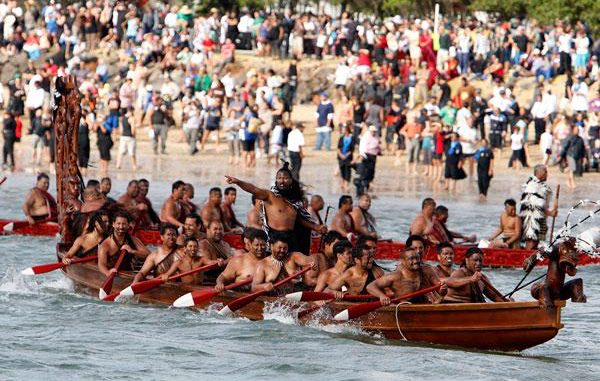
Throughout the history, the meaning and celebration of Waitangi Day changed significantly. Prior to the 1930s, Waitangi Day was not celebrated at all. This changed when Governor General Lord Bledisloe and his wife gifted the treaty house of James Busby’s and the grounds of Waitangi to the nation hoping to show to the public the uniqueness and the importance of the relationship between the indigenous Māori people and the colonizing British people. As a result of this action, the Waitangi Day was first celebrated in 1934.
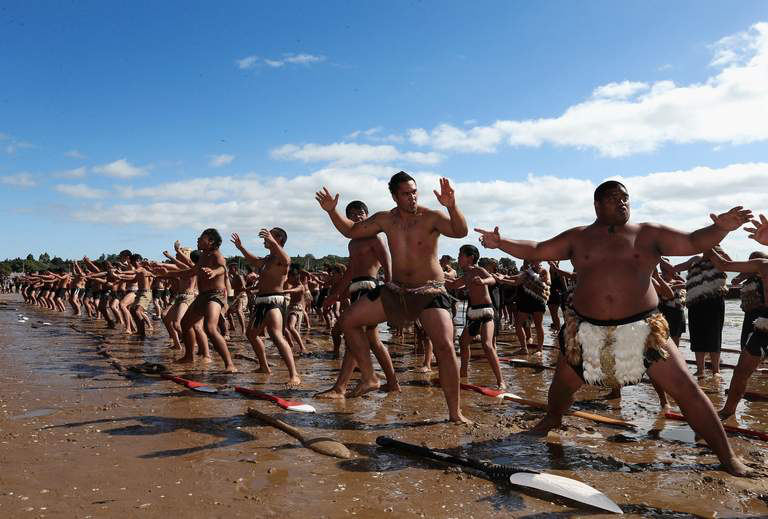
Annual celebration of the Waitangi Day started in 1947 in which the Royal New Zealand Navy had a ceremony that honored the day by erecting a new flagpole. From that moment onwards, more and more events were added to the ceremony such as having Māori speeches/cultural performances,
In 1957, the Labour Party of New Zealand promised to the public that if they were to be elected, they will make Waitangi Day a public holiday that will be celebrated throughout New Zealand in order to promote historical significance of the event. After they were elected, the Waitangi Day Act of 1960 was passed in which declared that February 6th would be known as the Waitangi Day. At first, the act did not provide for a public holiday as it would be too costly for the government to add yet another paid public holiday. After a long time of Māori asking for a national holiday, the Waitangi Day finally became a public holiday in 1974 under Prime Minister Norman Kirk. For the celebration of the new public holiday, the Flag of New Zealand was flown for the first time at the top of the flagstaff at Waitangi. Since then, Waitangi Day has been celebrated throughout New Zealand in which people were able to commemorate the signing of the treaty.
Sources: https://nzhistory.govt.nz/politics/treaty/waitangi-day
https://en.wikipedia.org/wiki/Waitangi_Day (picture)
 Pacific Memories